Floor insulation boards are rigid panels designed to reduce heat loss and improve energy efficiency in buildings. Unlike flexible rolls, insulation boards are firm, dense, and highly effective at providing thermal resistance in thinner layers.
Floor insulation boards: Types, costs & best options
Products overview
If you’re looking to make your floors warmer, lower your energy costs, and get a better EPC rating, floor insulation boards are a great place to start. These rigid sheets are designed to reduce heat loss through both suspended timber floors and solid concrete slabs, helping properties meet building regulations and energy efficiency targets across England, Wales or Northern Ireland. Whether you’re a homeowner or a property developer, insulation boards support sustainability goals, cut bills, and improve everyday comfort.
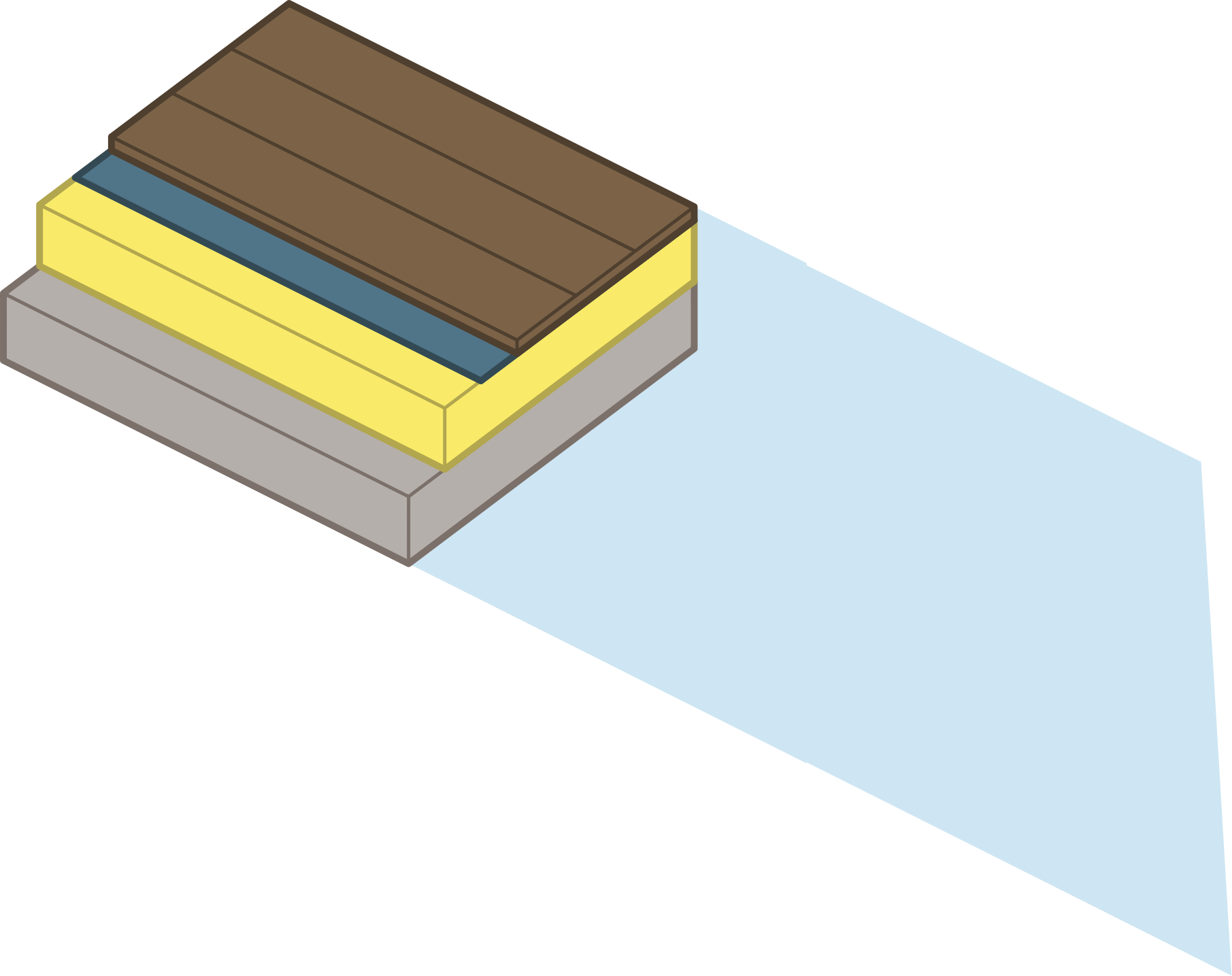
Suspended floor insulation
Floorboards
Floor Insulating Material
The main materials used for floor insulation boards are
PIR (polyisocyanurate),
EPS (expanded polystyrene)
and XPS (extruded polystyrene).
Each material has its own mix of thermal performance, moisture resistance, and price, so choosing the right board can make a big difference in your project outcomes.
For professionals such as builders, contractors, architects, and specifiers, floor insulation boards offer a practical solution for meeting strict U-values and energy performance standards, ensuring both new builds and existing homes comply with regulatory frameworks and support better EPC ratings.
Floor insulation boards play a pivotal role in helping homes, public buildings, and businesses meet the UK’s ever-tightening energy efficiency standards. As EPC rating requirements evolve, the choice of insulation product grows more important, not just for compliance, but for boosting the value, comfort, and sustainability of properties from suburban semis to large-scale residential blocks.
Product listings
Floor insulation boards come in a variety of thicknesses and sizes, so you can tailor your choice to the needs of your property and your budget. Here are the most common options:
- 25mm boards: Ideal for refurbishments and tight spaces.
- 50mm boards: A flexible choice for older suspended timber floors.
- 75mm boards: Good heat insulation with moderate height build-up.
- 100mm boards: Meets current building regs for new builds in most cases.
- 120–150mm boards: Chosen for high-performance projects, such as Passivhaus or ultra-low energy buildings.
You can filter floor insulation boards by:
- Material: PIR, EPS, XPS, mineral or eco-friendly boards.
- Thickness: Ranging from 25mm to 150mm.
- Brand: Leading names include Kingspan, Celotex, EcoTherm, Knauf.
- R-value/thermal resistance: For quick efficiency comparisons.
Some specialist boards offer extra benefits, such as acoustic insulation for noisy environments, integrated vapour barriers to manage moisture, or low-carbon manufacturing, making them a strong choice for sustainable builds and retrofits. Advances in manufacturing mean some floor insulation boards now use recycled content, improving credentials for architects and eco-conscious developers.
Brand comparison table
Here’s a table of how top floor insulation boards compare on material, performance and cost:
| Brand | Material | Thermal Conductivity (W/mK) | Moisture Resistance | Typical Cost (per m²) | Notes |
| Kingspan | PIR | 0.022–0.023 | High | £20–£35 | Widely used in new builds, BBA certified. |
| Celotex | PIR | 0.022–0.023 | High | £18–£30 | Strong reputation, meets building regs. |
| EcoTherm | PIR | 0.022–0.023 | High | £17–£28 | Cost-effective and good for bulk supply. |
| Knauf | EPS/XPS | 0.030–0.036 | Moderate to High | £10–£20 | Suitable for solid floors, budget-friendly. |
Remember to always check manufacturer specs for up-to-date certifications and compliance information.
It’s worth comparing whether certain brands offer extended warranties, free technical advice, or support with energy saving grant paperwork; factors that may sway bulk buyers and professional installers to choose a particular product for floor insulation projects.
Floor Insulation boards buying guide
This guide aims to help homeowners, builders, and renovators choose the right insulation for their floors. Since there are many different insulation types, materials, and installation methods, a buying guide breaks down the key factors so you can make an informed decision based on your property, budget, and goals.
How to choose the right insulation board for your floor
- Suspended timber floors: Rigid PIR or EPS boards fit between joists, offering efficient heat retention. For greener homes, consider eco-friendly options like sheep’s wool or hemp boards.
- Solid concrete floors: PIR, EPS, or XPS boards are laid above the slab, usually beneath a screed or floating floor system.
- Underfloor heating: Boards under heating pipes/mats are essential to keep heat where you want it, not leaking out below.
Don’t forget to factor in the floor height increase when choosing insulation thickness. In older homes, ramps or adjusted thresholds may help if doors won’t clear added insulation.
For listed buildings, extra care is required. Non-invasive or breathable floor insulation products are often needed in addition to careful consultation with heritage officers.
What thickness is required by building regulations?
Building regs in the UK typically ask for floor U-values of 0.25 W/m²K or lower. This means using around 100mm PIR boards for most new builds, but exact requirements depend on floor construction and the board selected. Always confirm with your local authority or building control, especially for large-scale property developments or listed buildings.
Thicker insulation boards can provide long-term savings and future-proof homes against upcoming EPC rating changes, which may demand even higher energy efficiency. Developers and housing associations often choose high-spec boards from the start to reduce the risk of having to retrofit later.
Floor Insulation board installation tips
- Ventilation is key for suspended timber floors – insulation shouldn’t trap moisture or lead to damp problems.
- Allow for height build-up with solid floors. Check doors, air vents, and skirting boards before fitting.
- Seal all gaps at board edges and joints. This prevents thermal bridging and maximises insulation performance.
- If you’re doing it yourself, cutting PIR and EPS boards to shape is manageable with simple tools; just follow safety advice and best practice guides.
- Larger or complex jobs, such as in commercial buildings, may need professional installers to guarantee compliance and durability.
For new builds and large renovations, installation should be coordinated with other trades (like electricians and plumbers) to avoid accidental damage to boards during construction.
Suspended timber floors in older public buildings or housing association properties may need extra assessment for rot or infestation before installing insulation. Moreover, fixing structural issues first prevents future problems.
Technical & compliance info
Building regulation U-values
- New build standards: Floors are usually required to meet 0.25 W/m²K or better.
- Renovations: Some flexibility exists, but upgrading insulation during works is highly recommended to future-proof your property and boost your EPC rating.
For commercial developments and government buildings, additional regulations like BREEAM or LEED certifications may apply, requiring more detailed documentation and performance data from insulation products used.
Fire ratings & certifications
- PIR boards (Kingspan, Celotex, EcoTherm): Typically Euroclass C/D, depending on facings.
- EPS/XPS boards: Usually Euroclass E, unless enhanced with fire-retardant facings.
- Certification: Always check for BBA certification or equivalent to ensure quality and compliance.
When specifying floor insulation for schools, hospitals, or other public buildings, check for additional compliance needs around fire safety, environmental impact, and occupant comfort. Manufacturers often offer technical support for these complex projects.
Acoustic performance is also important. Mineral-based floor boards may offer superior soundproofing for flats, offices, and multi-storey public buildings.
Costs & considerations
- Typical costs: £10–£40 per m² for floor insulation boards, depending on material and thickness.
- DIY vs professional: Homeowners may insulate smaller suspended floors themselves, but major upgrades to solid floors or public buildings often require skilled teams.
- Project disruption: Solid floor insulation usually means relaying screed, so it’s best done during full renovations, large-scale new builds, or property upgrades.
When budgeting, remember to account for disposal costs of old flooring, delivery charges for bulk insulation orders, and extras like vapour barriers or fixings. Developers and housing associations often negotiate discounts for very large orders.
Don’t forget that upgrading insulation can increase property value and make homes more appealing to energy-conscious buyers or tenants, boosting the EPC rating and marketability of your property.
Benefits of floor insulation boards
- Reduce heat loss: Up to 15% of home heat can escape through uninsulated floors.
- Lower energy bills: Efficient insulation cuts wasted energy, directly saving you money.
- Warmer, more comfortable floors: Especially noticeable in older homes with draughts or chilly boards.
- Sound insulation: Boards also help dampen noise between floors.
- Eco-friendly gains: Modern insulation boards support sustainability goals and improve EPC ratings, making homes and commercial buildings more attractive to buyers, tenants, and inspectors.
Insulated floors can help reduce carbon emissions for the entire property portfolio of a housing association, contributing to better sustainability rankings and compliance with government environmental targets.
For public buildings, properly installed floor insulation is often a requirement for grant funding, refurbishment financing, or compliance with inspection regimes.
Lifecycle and long-term value
Floor insulation boards are built to last, and the right product will keep performing for decades with minimal maintenance. PIR boards in particular have a proven lifespan when installed according to manufacturer instructions. This durability means fewer repairs, lower energy costs, and sustained property value over the years.
Researchers are increasingly looking at the full environmental impact of insulation boards, from manufacture to disposal. Recyclable or low-impact materials are now available, supporting green building certifications and sustainability initiatives for architects, property developers, and regulatory bodies.
Types of floor insulation boards explained
PIR (Polyisocyanurate): Best-in-class for thermal performance, moisture resistance, and fire safety certifications.
- EPS (Expanded Polystyrene): Budget-friendly, moderate insulation, excellent for DIY or large-scale installations.
- XPS (Extruded Polystyrene): Superior compressive strength, good in areas with damp or heavy loads (commercial sites).
- Mineral wool boards: Eco and acoustic performance, often preferred in public buildings or historic renovations.
- Eco insulation boards: Sheep’s wool, hemp, or recycled fibre options for low-carbon builds. These can be particularly beneficial in new housing developments or green retrofits.
Always match the board type to the project goals (compliance, cost, environmental credentials, EPC rating targets, acoustic needs, etc).
Common installation problems (and solutions)
Damp issues: Make sure timber floors remain ventilated and consider a vapour barrier beneath boards for solid floors.
- Poor fit: Use manufacturer-recommended cutting tools and carefully measure joist space or slab area.
- Thermal bridging: Fill all gaps – use foam or tape for the tightest seal.
- Unlevel floors: Level surfaces before laying boards for full contact and best performance.
- Certification: Always provide proper documentation for inspection or grant claims. Ask suppliers for help with paperwork.
Government grants and support
Various grants and subsidy schemes make energy-saving upgrades more affordable.
For homeowners, the Energy Company Obligation (ECO) scheme or local council grants sometimes cover floor insulation.
Property developers and housing associations can apply for funding linked to net zero targets or improved EPC ratings.
Public sector buildings may receive specific sustainability grants for insulation upgrades, with strict reporting requirements.
Always confirm eligibility before buying. Installers like Eco Insulation will often advise on application steps.
Advanced innovations in floor insulation
Vacuum Insulation Panels (VIPs): Ultra-thin panels with extremely low thermal conductivity, perfect where every millimetre counts.
- Phase-change boards: Can moderate indoor temperatures by absorbing/releasing heat, helping comfort and lowering energy costs.
- Smart floor insulation: Embedded sensors for ongoing monitoring—ideal for large public buildings, smart homes, or research projects.
- Modular insulation kits: Quick-fit packs for fast, compliant installations in renovation projects.
These advanced solutions are especially suited for architects, research organisations, or clients with net-zero and futureproofing priorities.
Sustainability and environmental impact
Selecting floor insulation boards with recycled content or low-carbon manufacturing helps your project meet sustainability benchmarks.
Look for Environmental Product Declarations (EPDs) when comparing boards—these give third-party verified lifecycle impact assessments.
Sustainable insulation boards can improve EPC ratings and support planning applications in conservation areas or for public buildings.
Common questions about floor insulation boards
Will floor insulation boards help my EPC rating?
Absolutely. Upgrading your floors with high-performance insulation boards makes your property more energy efficient, cuts annual heating costs, and raises your overall EPC rating. This is particularly important if you’re selling, renting, or aiming to meet MEES standards in England, Wales or Northern Ireland.
Are grants available to help cover costs?
Depending on your location and circumstances, grants or incentives may be available for home or large-scale floor insulation. Schemes change regularly, so check with your local council, installer, or government energy advice services.
Which product is best for a listed building or historic home?
When planning insulation for listed buildings, always contact your conservation officer. Some eco-friendly mineral wool boards or thin retrofit products may be suitable, but compliance and minimal impact are essential.
How do insulated floors affect indoor health?
Well-insulated floors minimise draughts and damp, helping protect against respiratory issues and improving overall indoor air quality. This is especially important for homes with children, the elderly, or vulnerable occupants.
What’s the return on investment for floor insulation boards?
For many homeowners, savings in heating bills will pay back the installation cost within a few years. Larger projects and public buildings enjoy ongoing savings plus compliance benefits and improved sustainability scores, leading to higher asset values and future-proofing.
Our Partner Installer
Need expert help with installation?
Eco Insulation offers professional supply and installation of floor insulation boards throughout the UK. Whether you’re a homeowner, builder, property manager, or developer, we’ll make sure your project delivers on comfort, compliance and energy efficiency.
[Request a quote from Eco Insulation today]
Not sure which boards are best for your property?
Our specialists can walk you through options—from PIR to EPS, eco boards to technical specs.
Final Thoughts
Floor insulation boards are one of the simplest but most effective ways to save energy and increase comfort in homes and buildings. Whether you’re improving a suspended timber floor, upgrading a solid slab, or planning a Passivhaus project, there’s a board that’s right for your needs, budget, and regulations. With prices starting around £10 per m², the long-term savings and improved property value will often cover the upfront investment.
Whether you’re a homeowner, architect, builder, developer, or regulator, floor insulation boards offer straightforward compliance, better EPC ratings, and the kind of warm, energy-efficient rooms everyone loves.
By choosing the right floor insulation boards and following best installation practices, you’re not just improving your home, you’re investing in lower energy costs, higher property value, and a more sustainable future. Public buildings, large-scale developments, and private homes can all benefit from upgraded floor insulation, meeting the UK’s evolving standards and creating warmer, happier spaces for years to come.