Floor insulation makes a significant difference in most pre war properties, but only if the floor structure it sits in is sound. Does floor insulation make a difference? The single most important factor in whether suspended floor insulation delivers on its promise is the condition of the joists it installs between. An installation over compromised joists does not perform as expected, may mask progressive structural damage, and can end up costing far more to rectify than the original insulation was worth. This guide explains what a proper joist condition survey involves, what it looks for, and what the findings mean for the insulation decision.
Why Joist Condition Matters
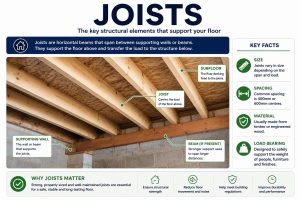
Suspended timber ground floors sit above a ventilated void. The joists, the structural timbers that span between sleeper walls and support the floorboards, sit in a position that exposes them to conditions that solid floors never encounter: variable moisture, ground air movement, and in some properties, inadequate ventilation that allows moisture to accumulate rather than disperse.
Timber joists in the right conditions last for generations. Victorian and Edwardian floor joists in well ventilated, dry voids are frequently in excellent condition more than a century after they were installed. Joists in poorly ventilated voids with blocked airbricks, persistent moisture from the ground, or water ingress from failed damp proof courses can deteriorate significantly within a decade.
The problem for floor insulation is that the installation process:
Changes the thermal environment of the void. Insulation between the joists makes the void colder and potentially more prone to condensation at the surface of the insulation. In a void with marginal ventilation, this can accelerate moisture related problems in the joists.
Makes the joists less accessible. Once insulation is in place, inspecting the joists requires either lifting the floor or going back into the void, neither of which is trivial. Problems that develop after installation go undetected for longer.
Can mask existing problems. An installer working from below who fits insulation around a joist showing early signs of rot has not caused the rot, but they have covered it. The homeowner has insulation in place and no visible sign of a problem, until the joist fails.
A thorough joist condition survey before installation catches problems while they are still accessible and manageable.
What a Joist Condition Survey Involves
A proper survey is not a brief look through the access hatch before the installer starts. It is a systematic inspection of every accessible joist, the sleeper walls they bear on, the wall plates where joists meet external walls, and the ground condition beneath the void.
Entry and Access
The inspector needs to physically enter the void. This requires either an existing access hatch or a temporary opening cut for the purpose. In a void with less than 400mm clearance, a full inspection is physically impossible from below and the inspector needs to be clear about which sections they could not reach.
Joist Assessment
Each joist is inspected along its accessible length for:
Surface rot. The most visible sign of fungal decay. Early surface rot appears as discolouration, softening of the wood surface, and a distinctive musty smell. Advanced rot causes the timber to crack across the grain and crumble under pressure.
Wet rot vs dry rot. Wet rot requires ongoing moisture to develop and stops progressing when conditions dry out. Dry rot is more serious, it can spread through a building beyond the original moisture source, travelling through masonry and affecting timber not in direct contact with the wet area. Dry rot produces characteristic white mycelium growth and causes timber to crack into cube shaped pieces.
Beetle damage. Common furniture beetle (woodworm) and other wood boring insects leave a characteristic pattern of exit holes in the joist surface. Active infestations show fresh frass around the holes. Historic infestations where the beetle has already left may have left significant internal damage that is not visible from the surface without probing.
Structural adequacy. Joists that have been notched or drilled for pipework or cables may have lost structural section. The inspector checks that any notching or drilling complies with the structural limits for the joist size.
Wall Plate and End Bearing Assessment
The most vulnerable section of any floor joist is the end where it bears on the wall plate, the timber that sits on the sleeper wall or the external wall. This is where moisture from masonry meets timber. It is also the most inaccessible section of the joist from above, which is why problems here are often missed until they are serious.
From below, the inspector can usually see the end bearing condition clearly and probe it with a penknife or bradawl, the traditional test for rot. Sound timber resists the probe and does not compress. Rotten timber yields readily and may not spring back.
Sleeper Wall Condition
Sleeper walls are the intermediate support walls that reduce the span of the joists. They sit on the oversite concrete or the ground below. An inspector checks that sleeper walls are intact, that they have adequate damp proofing at their base, and that they have not settled or shifted in a way that changes the joist bearing condition.
Ground Condition and Drainage
The condition of the ground beneath the void affects long term moisture levels. The inspector looks for signs of standing water, poor drainage, or organic material (including old insulation materials, timber offcuts, or rubble) that holds moisture and promotes fungal growth.
Airbrick Inventory and Adequacy
Airbricks ventilate the void and keep moisture at safe levels. The inspector counts the airbricks, checks they are clear and unobstructed, and assesses whether the ventilation provision is adequate for the void area. An underventilated void is a root cause of joist deterioration and adding insulation to an underventilated void will not improve matters.
Does Floor Insulation Make a Difference? What the Survey Findings Mean for Insulation
All Clear: Proceed With Insulation
Joists and wall plates in sound condition with no rot, no active beetle, adequate ventilation, and dry ground. Installation proceeds as planned. The survey provides assurance that the insulation will perform as expected and that there is no underlying structural problem being masked.
Minor Issues: Treat and Proceed
Early surface rot in isolated areas, minor beetle exit holes with no sign of active infestation, or slightly inadequate ventilation addressable by clearing existing airbricks. These issues get treated, a fungicide treatment to the affected sections, an insecticide treatment if required, additional airbricks if ventilation is marginal, before insulation proceeds. The treatment is documented and the installer noted in case a follow up inspection is needed.
Significant Rot: Repair Before Insulation
More than isolated surface rot, structural softening, dry rot presence, or evidence of significant beetle damage that has compromised joist section. Insulation waits. A structural engineer or timber specialist assesses the extent of the damage and specifies remedial work, joist sistering (adding a new joist alongside the damaged one), joist replacement in sections, or full floor renewal depending on the extent. Once the repair is complete and inspected, insulation proceeds.
This is the scenario where the survey pays for itself most clearly. A joist failure discovered during an insulation project, rather than before it, means the installed insulation needs removing to access the joist for repair and then reinstalling, doubling the cost of both the repair and the insulation.
Failed Damp Proof Course or Persistent Moisture: Address Root Cause First
If the ground beneath the void is wet, if the wall bases show signs of rising damp, or if blocked or absent airbricks have created conditions where moisture has been accumulating, the root cause needs resolving before insulation goes in. Adding insulation to a wet, poorly ventilated void does not improve matters and may make them worse.
How Much Does a Joist Survey Cost?
A professional joist condition survey from a qualified building surveyor or timber specialist costs approximately £200 to £500 for a typical semi detached property. This cost is small relative to the cost of the insulation installation it precedes, and very small relative to the cost of repairing structural damage that the survey might have caught.
Some floor insulation installers include a basic joist inspection as part of the installation survey. This is better than nothing but is not a substitute for a dedicated structural inspection by a surveyor with relevant qualifications. The installer’s primary interest is in completing the insulation; the surveyor’s interest is in identifying problems.
Does Floor Insulation Make a Difference: Frequently Asked Questions
Can I inspect my own joists? You can look and probe with a bradawl if you can access the void. Surface rot and significant beetle damage are visible to a careful observer. But distinguishing early wet rot from dry rot, assessing end bearing condition accurately, and identifying subtle structural inadequacy from drilling and notching requires experience. A professional survey is worth the cost on any property more than 50 years old.
What if I cannot access the void? If the void is too shallow for physical access, a borescope camera on a flexible cable can inspect end bearing points through small drilled holes. This gives limited but useful information about joist condition in otherwise inaccessible voids.
How often should joists be inspected? For properties with accessible voids, an inspection every 10 to 15 years is reasonable. Any time there is reason to suspect moisture problems, new damp patches, a musty smell from the floor, or visible damage to floor boards, an inspection is warranted regardless of when the last one was done.
Does joist condition affect the EPC rating? No. EPC assessors note the presence of floor insulation but do not assess joist condition. The EPC improvement from floor insulation is the same regardless of joist condition, but the long term performance of the insulation depends entirely on the structural integrity of what it sits between.
Information correct as of April 2026. Commission a joist condition survey from a qualified building surveyor before installing floor insulation in any pre war property.