Under floorboard insulation is one of the more disruptive home improvements, floorboards get lifted, joists get accessed, and most homeowners are not in a position to properly inspect the work themselves once the boards go back down. That makes it one of the easiest jobs to get away with doing badly, and one of the hardest for a homeowner to catch until months later.
How Under Floorboard Insulation Is Supposed to Work
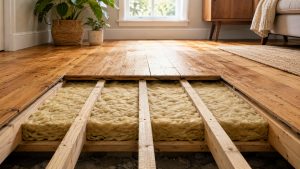
On a suspended timber floor, insulation is typically fitted between the joists, either mineral wool supported by netting, or rigid boards cut to size. The material sits in the void beneath the floorboards, and crucially, that void still needs airflow. Air bricks in the external wall ventilate the space underneath your floor, keeping the timber dry and preventing the whole system from turning into a sealed, damp box.
Good installation respects that airflow deliberately. Bad installation, often through simple carelessness rather than dishonesty, blocks it without anyone noticing until the symptoms show up.
The Signs Something Went Wrong
A musty smell that was not there before is usually the earliest warning sign, along with condensation building up in the subfloor void itself. If you can access the space beneath your floor, visible mould or early rot on the joists is a clear sign that moisture has been trapped rather than allowed to escape. From inside the room, cold, damp air coming up through the floor despite the insulation being fitted is a strong indicator that something in the installation did not go to plan.
Outside the property, blocked or missing air bricks are one of the most common and most avoidable causes. It is a straightforward mistake, insulation gets pushed too far, boarding covers a vent by accident, or nobody checks that airflow is preserved once the job is finished.
What to Check Before You Pay the Final Invoice
Before signing off on the work, ask specifically whether air bricks were kept clear during installation, and ask to see this rather than just being told. A reasonable installer will have no issue confirming ventilation was maintained, since it is a basic, expected part of the job, not an unusual request.
It is also worth asking how the insulation was supported in the joist space. Netting or boards that are properly fixed should not sag or compress over time. If material has been pushed in loosely without proper support, gaps can form that both reduce thermal performance and create pockets where moisture can collect.
Where the work has affected joist access more significantly, replacing a large section of flooring or altering joists themselves, current building regulations guidance treats moisture resistance and structural changes as connected issues, not separate ones. A competent installer working on a suspended timber floor should be thinking about ventilation and structure together, not insulation in isolation.
Why This Often Doesn’t Show Up Straight Away
The frustrating part of a bad under floorboard installation is the delay. Damp and rot in a subfloor void can take months to become obvious from inside the house, by which point the floorboards are long since back down and the installer has moved on. This is exactly why checking under floorboard insulation at the point of installation matters more than most people realise, once the boards are relaid, verifying the work becomes far harder.
If you are ever unsure whether an existing installation is causing a problem, our complete guide to floor insulation covers how different floor types are insulated and what a proper installation should look like for each one.
If You Already Suspect a Problem
If you are noticing any of these signs in a home that already has under floorboard insulation fitted, the first step is confirming whether it is genuinely insulation related or a separate damp issue entirely, since the two can look similar from inside a room. The same diagnostic logic applies here as it does with other insulation types. Our sister site on wall insulation has a detailed breakdown of how moisture problems develop and get diagnosed, which is a useful comparison even though the mechanism differs slightly for a suspended floor void.
For further detail on how floor insulation is meant to perform and what building regulations expect, the Energy Saving Trust’s guide to floor insulation is a reliable independent source to check against anything an installer tells you.
 Getting a Straight Answer
Under floorboard insulation done properly should be invisible in daily life, no musty smells, no cold draughts through the floor, nothing to think about once the job is finished. If you are getting quotes now, ask directly about ventilation before work begins, not after. Contact our team if you would like an honest assessment of whether your existing under floorboard insulation was installed the way it should have been.